
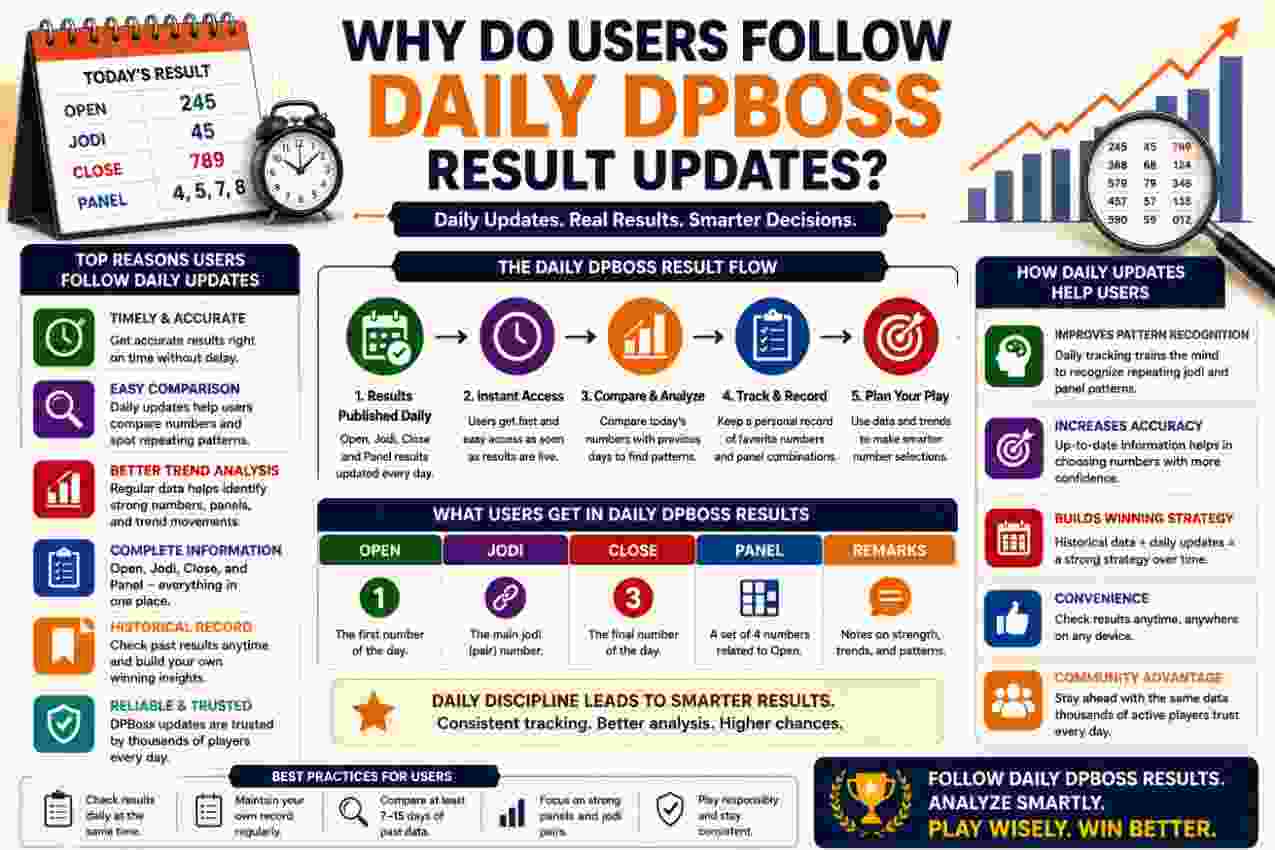
Daily Dpboss Satta result updates attract regular attention because users often want timely access to newly recorded numbers, clear result status, and an organized history of earlier outcomes. Frequent updates reduce the need to rely on memory or scattered information while making verification easier.
Moreover, daily checking can become part of a familiar information routine. Users may compare dates, confirm opening and closing values, or review previous records. However, frequent access to historical outcomes does not make future numbers predictable. Daily updates primarily provide current and archived information about results that have already been recorded.
What Are Daily Dpboss Satta Result Updates?
Daily result updates generally present numerical outcomes associated with specific result periods. Depending on the format, users may see opening values, closing values, singles, jodis, panels, dates, or status indicators.
The main purpose of an update remains straightforward: it communicates newly recorded information and connects that information with the correct result period. Consequently, users can check an outcome without searching through an entire historical record.
Updates Provide Time-Specific Information
A daily result has value because it connects a numerical entry with a particular date and period. Without that context, identical or similar numbers could become difficult to distinguish.
Therefore, users commonly check both the number and its associated date. This practice becomes especially important when several result categories appear close together.
Moreover, chronological organization allows newer entries to become part of an expanding historical record. Users can consequently return later and verify what appeared on a particular date.
Result Status Can Matter to Readers
Not every result component necessarily appears simultaneously. An opening value may become available before a closing value, depending on the structure involved.
As a result, users may return more than once to determine whether an incomplete entry has received additional information.
Clear status presentation can help distinguish:
- Newly recorded results
- Opening information
- Closing information
- Complete entries
- Pending fields
- Previous results
Consequently, users can identify what information is available without confusing an unfinished entry with a completed record.
Why Does Timeliness Attract User Attention?
Timeliness represents one of the strongest reasons people follow daily result updates. When information changes during a defined period, users naturally prefer the newest confirmed entry rather than an outdated record.
Additionally, timely presentation reduces uncertainty about whether a result has already appeared.
Users Want Recently Recorded Information
A person checking a daily result usually wants information associated with the relevant period. Older numbers may remain useful for historical checking, but they cannot replace a newly recorded outcome.
Therefore, clearly dated updates help readers distinguish fresh information from archived entries.
This distinction also reduces mistakes. Without visible dates or result periods, someone could accidentally treat an earlier number as the latest available entry.
Regular Updates Reduce Repeated Searching
When results follow a recognizable structure, users can check information more efficiently. They know which fields to inspect and where newer entries generally appear.
Moreover, consistent presentation reduces the need to search through unrelated material. A reader can focus on the required date, category, or result component.
Convenience therefore contributes significantly to repeated checking behavior.
Daily Checking Can Become a Routine
Repeated information needs often create habits. When users expect results at recurring intervals, checking can become part of a regular routine rather than an occasional activity.
However, routine checking does not provide additional predictive power. It simply reflects repeated interest in updated information.
Predictable Timing Encourages Repeat Visits
Information that appears according to a familiar schedule can encourage users to check around expected periods. The behavior resembles checking any frequently changing data source where freshness matters.
Once users know the approximate sequence of updates, they may return automatically.
Consequently, consistency can become as important as speed. Users generally value information that appears in a recognizable format at predictable intervals.
Familiar Layouts Make Checking Faster
A consistent Dpboss Satta result layout can reduce the effort required to find relevant numbers. Readers become familiar with the location of dates, opening values, closing values, and other fields.
Therefore, repeat users can often identify the required information quickly.
Familiarity also helps users notice incomplete entries, changed statuses, or newly added values without rereading every historical record.
Verification Drives Interest in Daily Results
Users do not always check results merely to see a new number. Many may return because they want to confirm information they encountered earlier or verify that they recorded an outcome correctly.
Accordingly, daily updates serve both immediate and historical checking purposes.
Users Can Confirm Specific Numbers
A reader may remember part of a result but remain uncertain about another component. For instance, someone might remember a single digit while forgetting the complete panel.
Returning to the recorded entry allows the user to verify the information against the relevant date.
Moreover, checking the complete row can prevent errors caused by partial memory.
Dates Help Prevent Result Confusion
Similar combinations can appear on different dates. Therefore, checking only a number without verifying its date can create confusion.
Users should first identify the relevant period and then follow the corresponding row across the displayed fields.
This simple approach improves accuracy because it keeps each result within its proper historical context.
Opening and Closing Values Require Clear Separation
Some result structures contain separate opening and closing components. Consequently, users need clear labels to determine which value belongs to each position.
A daily record that separates these fields supports easier verification.
Similarly, readers should avoid combining an opening value from one row with a closing value from another. Maintaining row alignment remains essential when viewing dense numerical records.
Historical Comparison Encourages Continued Interest
Every completed daily result eventually becomes historical information. As the archive grows, users gain more previous entries to review and compare.
This expanding record can attract attention beyond the immediate result period. However, comparison should remain descriptive rather than predictive.
Users Can Compare Different Dates
Historical records allow users to examine how results differed across multiple periods. Someone may check whether a particular digit appeared earlier or determine when a specific combination last occurred.
Such comparison can satisfy curiosity and support record verification.
Nevertheless, a previous appearance does not establish what will happen next.
Repeated Values Naturally Stand Out
When users scan many historical entries, repeated digits or combinations can become visually noticeable. A number appearing several times within a short period may attract particular attention.
Similarly, long gaps between appearances can seem significant.
However, repetition and absence remain historical observations. Neither condition guarantees a specific future outcome.
Charts Make Long Records Easier to Review
A structured chart can present many previous Dpboss Satta results without requiring separate entries for every date.
Rows usually separate periods, while columns distinguish result components. Consequently, users can scan historical information efficiently.
Organized presentation can also make comparisons easier because related values appear in predictable positions.
Curiosity Plays an Important Role
Numerical information naturally encourages curiosity, especially when results change frequently. Users may notice repeated digits, unusual combinations, or apparent sequences and then check subsequent updates.
Consequently, curiosity can sustain attention even when someone has already verified the result they originally wanted.
People Naturally Notice Patterns
The human mind readily identifies similarities and sequences. Repeated numbers, mirrored combinations, and alternating digits can therefore attract attention within historical data.
However, visible structure does not automatically indicate a dependable pattern.
Uncertain sequences can produce clusters, repetitions, and unusual arrangements naturally. Therefore, users should separate visual observations from claims about future results.
Unexpected Results Can Increase Interest
An outcome that differs sharply from what someone expected may encourage further checking. Users may return to earlier records to compare the new result with previous combinations.
Additionally, an unusual-looking panel or repeated digit can encourage closer inspection.
This behavior reflects curiosity about historical relationships rather than proof that those relationships carry predictive value.
Convenience Influences Daily Checking Behavior
People generally prefer information that requires minimal effort to locate and interpret. Therefore, clear organization can strongly influence whether users return to a daily result format.
Speed alone does not create convenience. Accurate labeling, readable spacing, and chronological organization matter equally.
Clear Formatting Saves Time
A well-structured result record allows users to locate dates and numerical fields quickly. Instead of scanning an unorganized collection of numbers, readers can move directly to the relevant row.
Useful formatting may separate:
- Result dates
- Opening panels
- Opening singles
- Closing singles
- Closing panels
- Completed records
- Pending information
Consequently, users spend less time determining what each number represents.
Short Checking Sessions Become Possible
Many users may only need to confirm one specific result. A clear layout supports this behavior by allowing them to find the required information without reviewing every previous entry.
Moreover, familiar formatting makes later visits faster because readers already recognize the structure.
Convenience can therefore encourage regular checking even when each individual visit remains brief.
Mobile Access Can Increase Result Checking
Frequent information checking often occurs through mobile devices. Small screens make clarity particularly important because wide numerical layouts can become harder to follow.
Therefore, users may favor result formats that remain readable without excessive navigation.
Simple Presentation Works Better on Smaller Screens
Dense numerical data can become confusing when rows wrap or columns lose alignment. A straightforward structure reduces that problem.
Users should still verify the selected date carefully before reading across a row, particularly when a chart requires horizontal movement.
Additionally, clearly separated fields can reduce accidental mixing of neighboring values.
Quick Access Supports Frequent Verification
Mobile access allows users to check information during short periods of availability. Consequently, daily result checking does not necessarily require a long session.
A user may simply confirm a newly recorded number and leave.
This accessibility can contribute to repeated engagement because the information remains easy to check whenever needed.
Notifications and Expectations Can Shape Interest
When people expect information to change, anticipation can influence checking behavior. Even without formal notifications, users may remember approximate update periods and return accordingly.
Meanwhile, delayed or incomplete information can encourage additional checks.
Expected Updates Create Anticipation
A known result schedule gives users a reason to check at particular times. As the expected period approaches, attention may increase because readers want confirmation that new information has appeared.
After an opening result appears, some users may later check whether the closing component has been recorded.
Consequently, one result cycle can create multiple information-checking moments.
Incomplete Records Encourage Follow-Up Checks
A partially completed entry does not answer every question a user may have. Therefore, someone who sees only opening information may return later for the completed result.
Clear pending indicators can reduce confusion during this process.
However, readers should avoid interpreting missing information as evidence for any particular future value.
Accuracy Matters More Than Speed Alone
Fast updates attract attention, but speed has limited value when information contains errors. Users need accurate dates, correct numerical entries, and clear distinctions between completed and pending results.
Therefore, responsible result checking should prioritize verification over urgency.
Incorrect Entries Can Cause Confusion
A misplaced digit can alter the meaning of a result significantly. Likewise, associating a correct number with the wrong date creates an inaccurate record.
Users should therefore check complete entries rather than relying on partial screenshots, remembered numbers, or isolated messages.
Corrections Should Remain Clear
If a numerical record changes because of an earlier display error, the corrected information should appear clearly enough for users to distinguish it from the previous entry.
Otherwise, conflicting versions may continue circulating.
For readers, checking the date and full result structure provides better context than relying on a single copied number.
Daily Results and Prediction Are Different
Daily Dpboss Satta updates document recorded outcomes. Predictions attempt to describe results that have not yet occurred.
This distinction remains essential because historical charts can make numerical patterns appear more meaningful than they actually are.
Recorded Outcomes Represent Facts About the Past
Once an outcome has been recorded accurately, users can associate it with its relevant date and result category.
The entry then becomes part of the historical archive.
Consequently, users can verify and compare it later without changing its factual status.
Historical Sequences Do Not Guarantee Future Numbers
A digit may appear repeatedly across several results. Alternatively, another value may remain absent for a long period.
Neither observation proves what will appear next.
Random or uncertain outcomes can naturally create repetitions, streaks, clusters, and gaps. Therefore, users should not treat historical frequency as a guaranteed forecasting method.
Why Pattern Tracking Attracts Attention
Some users follow daily results because each new entry adds another data point to an existing historical sequence. This can make long-term tracking feel engaging.
Nevertheless, pattern tracking should remain an observational activity rather than a source of certainty.
Frequency Creates Visual Interest
A user may count how often specific digits appear during a selected period. Frequent values can then seem especially noticeable.
However, changing the selected period can change the apparent pattern. A number that looks frequent across one week may appear ordinary across a much larger sample.
Therefore, frequency requires context.
Gaps Can Look Significant
Long absences often attract attention because people may feel that a missing number has become due.
That assumption can reflect the gambler's fallacy. When uncertain outcomes operate independently, previous absences do not force later compensation.
Consequently, gap tracking describes historical spacing but does not establish future certainty.
Responsible Ways to Follow Daily Updates
Daily result information can serve a straightforward record-checking purpose when users approach it carefully. Clear boundaries help prevent frequent checking from becoming financially or emotionally harmful.
Moreover, responsible interpretation keeps historical records separate from unsupported forecasting claims.
Use Results for Verification
Users can treat daily updates as records of completed outcomes. This approach supports checking dates, confirming numbers, and maintaining accurate historical context.
It also reduces the temptation to assign predictive meaning to every repetition or gap.
Avoid Chasing Losses
Chance-based activities can create financial risk. Attempting to recover previous losses through larger or repeated wagers can increase that risk quickly.
Therefore, users should never treat daily result tracking as a dependable income strategy.
Practical limits, including fixed spending boundaries and avoiding borrowed funds, can reduce financial harm.
Be Skeptical of Guaranteed Claims
No historical chart, daily sequence, numerical formula, or prediction can justify absolute certainty about an uncertain future result.
Claims involving guaranteed numbers, fixed outcomes, or assured returns deserve strong caution.
Likewise, a successful past prediction does not prove that future predictions will succeed.
Conclusion
Users follow daily Dpboss Satta result updates because timely information supports quick checking, verification, historical comparison, and convenient record tracking. Consistent schedules and familiar layouts can also turn occasional checking into a recurring information habit.
Additionally, each completed result expands the historical record and creates new opportunities for comparison. However, frequency, repetition, gaps, and apparent sequences cannot guarantee future outcomes. Daily updates provide the greatest informational value when users treat them as records of completed results, verify dates carefully, distinguish current information from predictions, and maintain responsible boundaries around chance-based activities.
FAQs
Why do users check Dpboss Satta results every day?
Users may check Dpboss Satta results regularly to see newly recorded outcomes, verify opening or closing information, confirm dates, and review historical entries. Familiar schedules and convenient access can also encourage repeated checking. However, frequent monitoring does not improve the predictability of future uncertain results.
Why are previous results important to daily users?
Previous results create a historical record that users can revisit when verifying numbers or dates. They also allow comparisons between different periods and result components. Nevertheless, historical frequency, repetition, or absence only describes earlier outcomes and cannot guarantee that a similar pattern will continue in later results.
Can daily result updates predict future numbers?
No. Daily updates record outcomes after they become available; they do not provide reliable certainty about future results. Although users may notice repeated digits, streaks, gaps, or similar combinations across historical records, those patterns can occur naturally and should not be treated as guaranteed forecasting signals.
Why might users check a result more than once?
Some result formats provide information in stages, such as separate opening and closing components. Consequently, users may first check an initial value and return later for the completed entry. Others may revisit a result to verify a date, correct a remembered number, or compare it with an earlier record.
How should users interpret daily historical patterns?
Users should treat patterns as descriptions of recorded history rather than promises about future outcomes. Repeated numbers, long gaps, and unusual combinations may attract attention, but they do not establish certainty. Careful interpretation focuses on dates, complete entries, accurate categories, and verified records while avoiding unsupported predictive conclusions.